
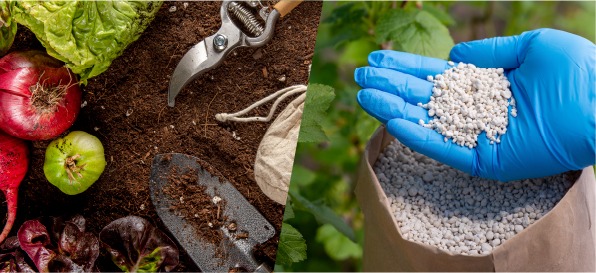
The environmental impact of chemical fertilizers
“The food we grow may be feeding us—but is it poisoning our planet?”
Chemical fertilizers have boosted agricultural yields for decades, but their environmental impact is increasingly alarming. So, what exactly are chemical fertilizers? They are industrially manufactured products containing concentrated nutrients like nitrogen (N), phosphorus (P), and potassium (K). But their overuse is increasingly linked to pollution, greenhouse gas emissions, and soil degradation.
In the U.S., when these fertilizers wash off farms into rivers and lakes (fertilizer runoff), they cause harmful algae to grow and create “dead zones” where fish can’t survive—like in the Gulf of Mexico. Also, the nitrogen from fertilizers can seep into the ground and mix with drinking water, which can be unsafe for people’s health. The U.S. Environmental Protection Agency (EPA) reports that agriculture is the leading cause of nutrient pollution in rivers and lakes across the country.
HYPERLINK “https://www.epa.gov/nutrientpollution/sources-and-solutions-agriculture”At VerdantGro, we’re leading the shift toward sustainable solutions by offering organic alternatives that are better for crops—and the planet. Learn more about our granular fertilizer and seaweed kelp solutions designed to reduce environmental harm while supporting healthy yields.
How Chemical Fertilizers Affect the Environment
“Feeding the world comes at a cost—and that cost may be our environment.”
Did you know? The production and use of chemical fertilizers are responsible for nearly 2.1% of global greenhouse gas emissions, according to the United Nations Environment Programme (UNEP, 2022). From carbon emissions to water pollution, the effects are far-reaching:
-
Carbon Emissions from Production & Application
Chemical fertilizer production, especially nitrogen-based, burns fossil fuels and releases greenhouse gases that trap heat and drive climate change. For instance, 1 ton of nitrogen fertilizer can emit up to 6.7 tons of CO₂, meaning large farms using it heavily have a significant carbon footprint.
-
Nitrous Oxide and Greenhouse Impact
Nitrogen fertilizers release nitrous oxide, a greenhouse gas nearly 300 times stronger than CO₂, making even small amounts highly damaging to the climate. Overuse also causes fertilizer runoff, leading to algal blooms, fish die-offs, and contaminated drinking water—issues widespread in the U.S. due to nitrogen leaching in groundwater
Local and Regional Impacts of Chemical Fertilizers
Fertilizer runoff in the USA is fueling a major environmental crisis. Each year, nitrogen and phosphorus from synthetic fertilizers flow down the Mississippi River, creating a 3,000+ square mile dead zone in the Gulf of Mexico where marine life can’t survive.
Midwestern states like Iowa and Illinois are hotspots, with heavy corn and soybean farming causing nitrogen leaching in groundwater and threatening rural drinking water. Nationally, agriculture accounts for 11% of U.S. greenhouse gas emissions, with a large share linked to greenhouse gas from fertilizer use and production.
At Veridian Earth, we promote synthetic fertilizer alternatives like Soil Conditioners and Liquid Fertilizers that build soil health and cut emissions.
Recent Data & Case Studies
Recent studies confirm that the environmental impact of chemical fertilizers is real—evident in U.S. water tests, air emissions, and farm case studies. A 2022 EPA study found that more than 1 in 5 U.S. wells in agricultural areas showed signs of nitrogen leaching into groundwater, raising concerns about drinking water safety.
In 2023, the U.S. Geological Survey (USGS) reported that over 70% of nitrogen pollution in rivers and lakes comes from agriculture. This type of fertilizer runoff in the USA is a major cause of synthetic fertilizer pollution, leading to harmful algal blooms, oxygen depletion, and toxic water conditions.
While the EU’s Farm-to-Fork strategy is leading globally with strict limits on synthetic inputs, the U.S. has its own initiatives underway. Programs like CSP and EQIP provide funding and support for farmers to reduce chemical fertilizer emissions and adopt synthetic fertilizer alternatives. These efforts reduce the greenhouse gas from fertilizer, protect water bodies, and encourage more sustainable soil practices.
Comparing Chemical vs. Organic Inputs
While chemical fertilizers are known for delivering fast results, their long-term impact on soil, water, and the climate raises major concerns. In contrast, organic inputs offer a more sustainable approach, improving soil health and reducing synthetic fertilizer pollution over time.
By contrast, organic fertilizers such as compost, manure, and seaweed-based solutions release nutrients slowly, enriching soil structure, retain moisture better, and increase microbial activity. A 2023 USDA study found that long-term organic fertilizer use can boost soil organic carbon by up to 30%, which enhances resilience to drought and improves crop yields over time.
At VerdantGro, we specialize in organic solutions that protect both productivity and the planet. Explore our granular fertilizer or liquid fertilizer to start your shift toward cleaner farming practices.
Solutions and Alternatives
“The future of farming isn’t less productive—it’s just smarter and more sustainable.”
As awareness grows about the environmental impact of chemical fertilizers, farmers, scientists, and policymakers are turning to smarter, cleaner alternatives. These solutions aim to maintain crop yields while reducing synthetic fertilizer pollution, chemical fertilizer emissions, and long-term harm to soil and water.
Smarter Solutions for Reducing Environmental Harm
-
i. Precision Agriculture
Modern tools like satellite imaging, soil sensors, and AI-powered data analysis help farmers apply fertilizers only where and when they’re needed. This reduces waste, lowers greenhouse gas from fertilizer, and minimizes fertilizer runoff in the USA.
-
ii. Slow‑Release Fertilizer Technology
These advanced formulations release nutrients gradually, giving plants what they need over time while reducing the risk of nitrogen leaching into groundwater and synthetic fertilizer pollution.
-
iii. Biological Nitrogen Fixation
Certain plants and microbes naturally add nitrogen to the soil, cutting down the need for synthetic inputs. This helps reduce nitrogen fertilizer environmental harm and supports healthier soil systems.
iv. Veridian Earth’s Role in Driving Change
At Veridian Earth, we’re helping farmers shift to synthetic fertilizer alternatives that protect both yield and the environment. Our products are designed to reduce the climate effects of synthetic nitrogen fertilizers while improving soil health naturally.
Explore our best-selling solutions:
-
- Granular Organic Fertilizer – slow-release and mineral-rich
- Seaweed Kelp Liquid Fertilizer – boosts plant resilience naturally
- Liquid Foliar Spray – fast-absorbing and eco-friendly
- Granular Organic Fertilizer – slow-release and mineral-rich
Conclusion: A Greener Path Forward
The widespread use of synthetic fertilizers has boosted food production—but at a steep environmental cost. From chemical fertilizer emissions and synthetic fertilizer pollution to fertilizer runoff in the USA and nitrogen leaching into groundwater, the impact is evident across our soil, air, and water systems.
Explore sustainable alternatives like slow-release fertilizers, biological nitrogen fixation, and organic soil conditioners. Together, we can reduce chemical fertilizer emissions and build a greener, more resilient future for American agriculture.
FAQs
i. What is the environmental impact of chemical fertilizers?
Chemical fertilizers contribute heavily to greenhouse gas emissions, soil acidification, and ocean dead zones through nutrient runoff. Globally, fertilizer production and use account for up to 2.6 Gt of CO₂-equivalent emissions per year, surpassing global aviation emissions.
ii. How do chemical fertilizers pollute water and soil?
Excess nutrients not absorbed by plants enter groundwater or runoff into rivers, causing eutrophication and toxic algal blooms. Nearly two-thirds of the nitrogen applied globally ends up as environmental pollution. Phosphorus runoff also stands at over 50% of applied amounts, worsening water quality.
iii. Why is fertilizer production so energy-intensive?
The Haber-Bosch process, used to manufacture ammonia, consumes a significant portion of the world’s natural gas and energy. It accounts for 1–2% of global energy use, and its emissions footprint makes it one of the most carbon-intensive industrial reactions.
iv. Can controlled-release fertilizers reduce impact?
Some newer fertilizers aim to slow release of nutrients to minimize runoff—but many still use plastic encapsulation. A recent study found microplastics from coated fertilizers contaminating U.S. cropland, soil, and potentially food systems.
v. What are sustainable alternatives to synthetic fertilizers?
Adopting organic fertilizers, precision application, cover cropping, and microbial solutions can maintain yield while reducing environmental harm. Regenerative agriculture techniques could reduce fertilizer-related U.S. emissions by nearly 10%, according to one analysis.